英和辞典
  
out小A1
áutアウト
意味map
副詞
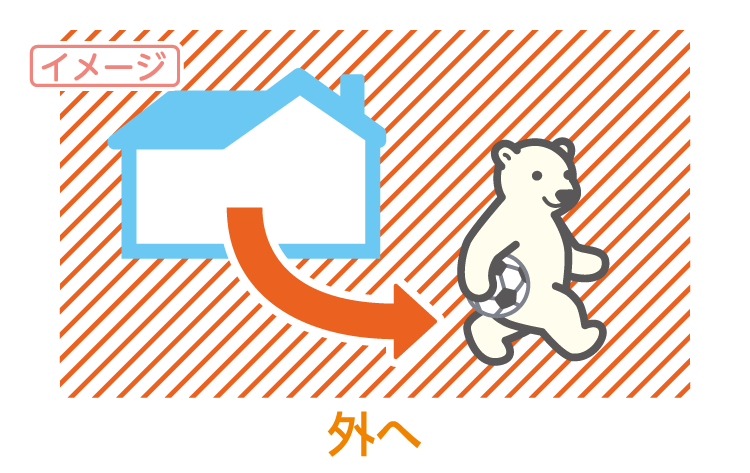
❶外へ
❷外で, 外に; (外へ)出て
❸大声で, はっきりと
❹消えて
❺最後まで
副詞(⦣ 比較変化なし)
❶外へ, 外を
go out
♔基本go out
(外へ)出て行く
  ⦣ 動詞+out.
get out
get out
外へ出る, 出る
look out
look out
外を見る
The sun came out after the rain.
雨がやんだ後で太陽が出てきた.
He took me out into the garden.
彼は私を庭に連れ出した.
  ⦣ まず out (外へ)とだいたいの場所を示し, 次に into the garden (庭へ)と具体的な場所を示す言い方.
The sheriff came in after the tall gunman went out.
反対語The sheriff came in after the tall gunman went out.
長身のガンマンが出て行った後に保安官が入って来た.
My father has gone out for a walk.
父は散歩に出かけた[出かけて家にいない].
  ⦣ 現在完了かんりょうの文. have助動❶
❷外で, 外に; (外へ)出て, (現れ)出て
eat [dine] out
eat [dine] out
(レストランなどで)外食する
She is out shopping.
彼女は買い物に出ています.
My father is out in the garden.
父は庭に(出て)いる.
It's cooler out there.
あそこの外のほうが涼すずしい.
  ⦣ It は漠然ばくぜんと「気温」を表す.
"The book is out, " the librarian said.
“The book is out, ” the librarian said.
「その本は借り出されています」と図書館の人は言った.
The stars are out.
The stars are out.
星が出ている.
The blossoms will be out soon.
じき花が咲さくでしょう.

❸大声で, はっきりと
She called out for help.
彼女は大声で助けを求めた.
❹消えて, なくなって; (野球で)アウトで
go out
go out
消える, なくなる, 廃すたれる
die out
die out
死滅しめつする, 廃れる
blow a candle out
blow a candle out
ろうそくを吹ふき消す
Time ran out.
Time ran out.
時間がなくなった[時間切れだ].
The fire is out.
The fire is out.
火は消えている.
The batter is out.
The batter is out.
バッターはアウトだ.
❺最後まで, すっかり, 徹底てってい的に
Hear me out.
Hear me out.
私の言うことを終わりまで聞いてください.
I am tired out.
I am tired out.
私はへとへとに疲つかれ切っている.
前置詞
米話 ~から外へ[に], ~から外を  ⦣ out of の of が落ちた形.
look out the window
look out the window
窓から外を見る
名詞複outsáutsアウツ
野球 アウト
out of ~out of ~A2
out of ~A2
①(~の内)から外へ[に], ~から外を; ~を外れて
go out of the room
go out of the room
部屋から出て行く
get out of a car
get out of a car
車から出る, 車を降りる
類似語「(バスや電車など大きな乗り物)から降りる」は get off.
look out of the window
窓から外を見る
Get out of my way.
Get out of my way.
そこをどけ.
An Englishman without a garden is like a fish out of water.
庭のないイギリス人は水から出た魚のようだ.
  ⦣ 「本来の力を奪うばわれてしまってどうしてよいかわからなくなる」の意味. 日本語表現の「陸おかに上がった河童かっぱ」にあたる.
②~を切らして, ~がなくなって
Many people are now out of work.
今多くの人が職を失っている.
We're out of coffee.
私たちは今コーヒーを切らしている.
③~のうちから[で]
nine people out of ten
10人のうち9人(まで)
He was chosen out of a hundred.
彼は100人のうちから選ばれた.
④動機・原因など~から
out of kindness [curiosity]
親切[好奇心こうきしん]から
He did that out of love for her.
彼は彼女への愛情からそれをしたのだ.
⑤材料~から, ~で
This table is made out of an old box.
このテーブルは古い箱で作られている.
out of doorsout of doors
out of doors
戸外で(は) door 成句
out of orderout of order
out of order
調子が乱れて order 成句
教科書エッセンス
基本の意味
「(境界のある空間の)外へ」が基本の意味(❶).外に出て行った結果に注目すると❷「外で」の意味になる.隠れず外に出ているイメージから, ❸「はっきりと」の意味が生じる.外に出て行って元の場所から見えなくなるイメージから, ❹「消えて」の意味が生じる.行為こういを終えてその範囲の外に出るというイメージから, ❺「最後まで」の意味が生じる.❶「外へ」の意味の場合に「~から」は of で表し, out of として一緒いっしょに用いられることも多い.
教科書によく出る使い方
副詞
❶Toshihiko went out of the classroom.俊彦は教室から出て行った.
副詞
❷How about eating out tonight?今晩は外食ではどうかしら?
副詞
❹Hurry! Time is running out!急いで!もう時間がなくなってきているからね.
副詞
❺She carried out her promise.彼女は約束を実行した.