❶それは, それが ⦣ 3人称しょう単数の主格.
関連語its (それの), they (それらは[が])
itの変化| | 単 数 形 | 複 数 形 |
| 主 格 | it | they |
| (それは[が]) | (それらは[が]) |
| 所 有 格 | its | their |
| (それの) | (それらの) |
| 目 的 格 | it | them |
| (それを[に]) | (それらを[に]) |
| 所有代名詞 | ― | theirs |
| (それらのもの) |
I have a bicycle. It (=The bicycle) is a new bicycle.
♔基本I have a bicycle. It The bicycle is a new bicycle.
私は自転車を持っています. それは新しい自転車です.
⦣ Itは文の主語.
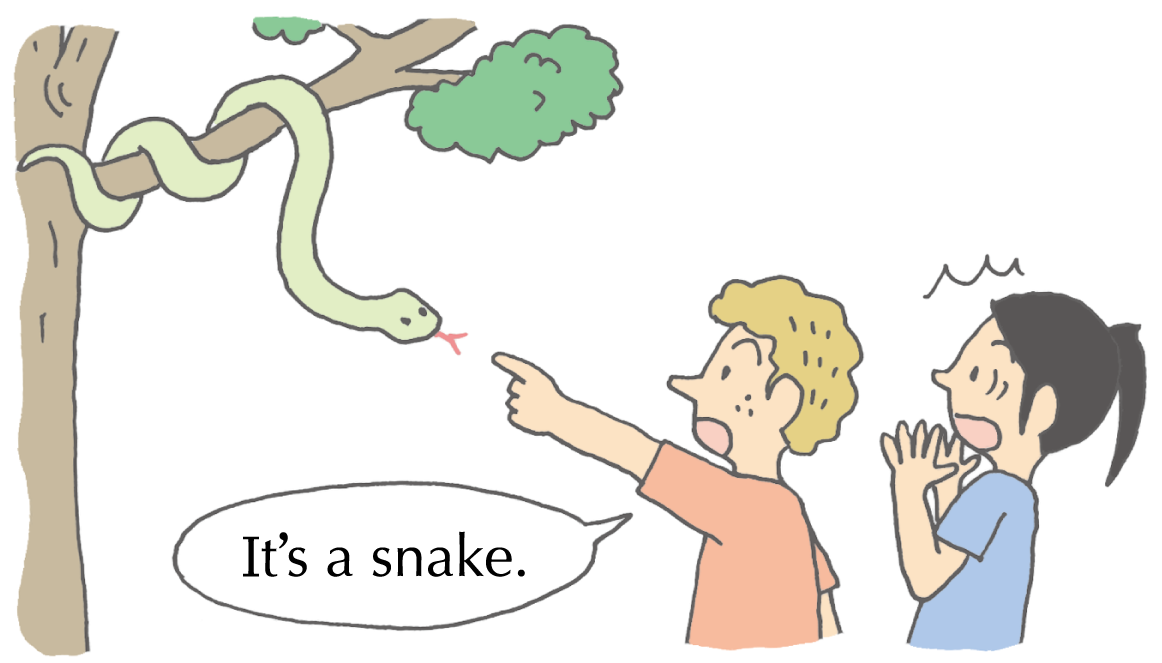
What is that? Is it (=that) a rope?—No, it isn't. It's (=It is) a snake.
会話What is that? Is it that a rope?—No, it isn't. It's It is a snake.
あれは何ですか. (それは)ロープですか.—いいえ, 違ちがいます. ヘビです.
✓POINT
it は非常に軽い言葉で, 何を指しているかが明らかな時は日本語に訳さないほうがよい.
Who is it?—It's me.
Who is it?—It's me.
誰だれですか.—私です.
✓POINT
「人間」であっても, それが誰であるかわからない時は it を使う.
❷それを, それに, それ ⦣ 3人称単数の目的格.
I have a bicycle. I like it (=the bicycle) very much.
♔基本I have a bicycle. I like it the bicycle very much.
私は自転車を持っています. 私はそれがとても気に入っています.
I opened the box and found a pretty doll in it (=the box).
I opened the box and found a pretty doll in it the box.
箱を開けたらその中にかわいい人形が入っていた[入っていることに気づいた].
*会話*
So this is Nara. It's more peaceful than Kyoto, isn't it?—Yes. I love it here.
じゃ, ここが奈良ですね. 奈良のほうが京都よりのんびりしていますね.—ええ, 私はここが大好きです.
⦣ here は it Nara を補足する形で添そえられたもの.
❹あとに来る to do, doing, または that ~ を受けて
✓POINT
この it は形式的な主語(最初の3例)または目的語(最後の例)で, 本当の主語や目的語はあとに続く to do, doing, that ~ など.
It is good to get up early in the morning.
It is good to get up early in the morning.
朝早く起きることはよい.
⦣ It=不定詞 to get up (起きること)以下.
It was nice of her to take care of my baby.
It was nice of her to take care of my baby.
彼女は親切にも私の赤ちゃんの面倒をみてくれた.
⦣ 前の her は不定詞 to take care (面倒をみること) の意味上の主語彼女が面倒をみる. 「彼女は親切にも~した」を ×She was nice to take care ~ としない.
It is important that we study science.
It is important that we study science.
私たちが理科を勉強することは重要です.
⦣ It=that 以下.
I think it easy for you to solve this problem.
I think it easy for you to solve this problem.
君がこの問題を解くのは簡単だと思うよ.
⦣ it=to solve 以下.